Plumbing service
Sewer line repair and replacement
When the camera shows a crushed section, an offset joint or a belly holding water, cleaning no longer solves anything. The pipe has to be opened and replaced, either in a short section or end to end.
- Common failures: Crushed clay, open joints, sagging runs, rotted cast iron
- Replacement pipe: PVC sewer pipe with gasketed joints
- Permits: Plumbing permit and inspection under the Ontario Building Code
- Before digging: Ontario One Call locate for buried utilities
- Licensed, insured trade work (details confirmed when you call)
- Diagnosis before anything is cut
- Emergency calls taken
- Etobicoke and the west end
At a glance
- Common failures
- Crushed clay, open joints, sagging runs, rotted cast iron
- Replacement pipe
- PVC sewer pipe with gasketed joints
- Permits
- Plumbing permit and inspection under the Ontario Building Code
- Before digging
- Ontario One Call locate for buried utilities
Section repair or full run
If the camera shows one bad spot and the rest of the line is sound, a section repair is the sensible fix: open the ground over the fault, cut out the damaged piece, and couple in new pipe. If the line has many failing joints, replacing the whole run saves digging the same lawn twice.
- We show you the footage and the distances so you can see why we are recommending one over the other.
What the dig involves
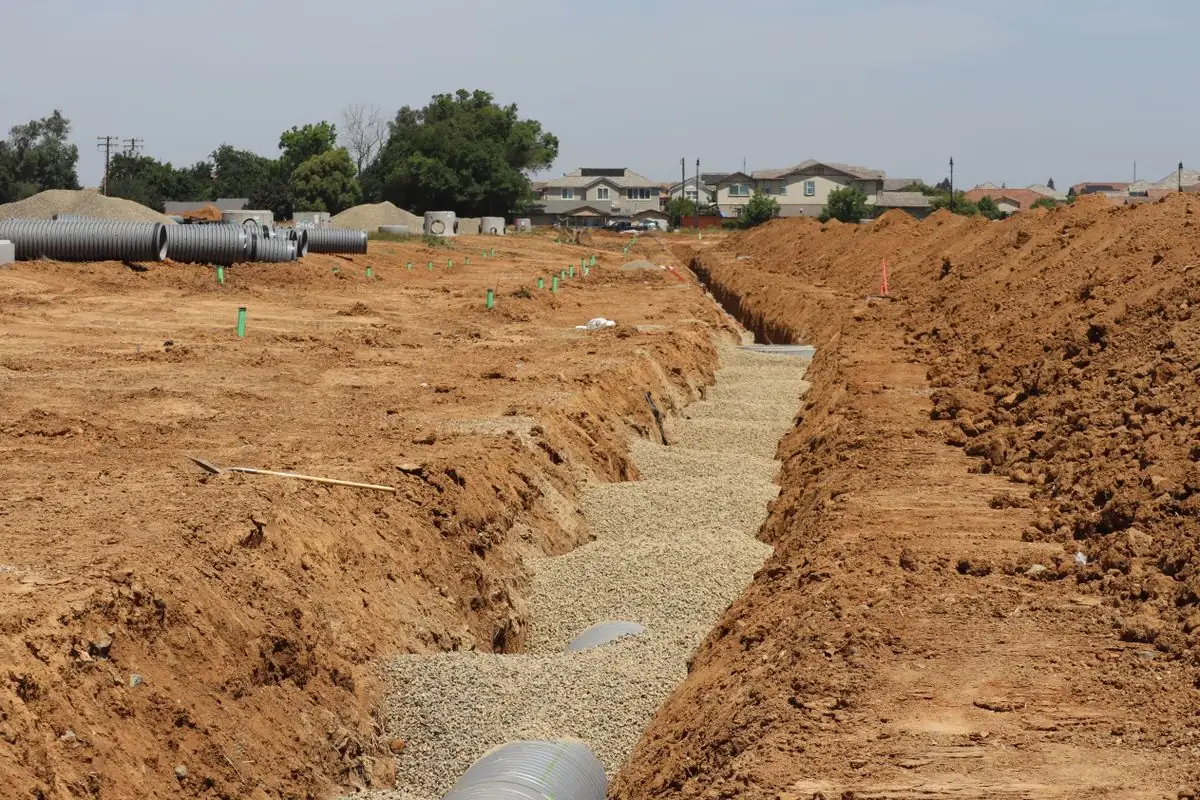
Before any shovel goes in, Ontario One Call sends locators to mark gas, hydro and communications lines. The excavation is shored as needed, and the pipe is bedded in proper granular material so it does not settle into a new sag.
- Inside the basement, a repair under the slab means cutting and breaking the concrete along the run, then patching it once the inspection passes.
Inspection and restoration
Sewer work requires a permit, and the open trench is inspected before backfilling. After that, the trench is compacted in lifts and topped with soil. Sod, interlock or driveway restoration is arranged with you up front, so nothing comes as a shock.
- If your house also needs a backwater valve, installing it while the line is open causes much less upheaval than a separate job later.
Signs to watch for
- Camera shows broken or crushed pipe
- Backups return within weeks of cleaning
- Sinkhole or depression over the sewer path
- Sewage smell in the yard
- Pieces of clay on the cable head
How the job runs
Locate and plan
Camera footage, utility locates and a permit come first.
Excavate
The fault is opened with the trench protected.
Replace pipe
New PVC is laid on proper bedding and coupled in.
Inspect and backfill
The inspector signs off before the ground is closed.